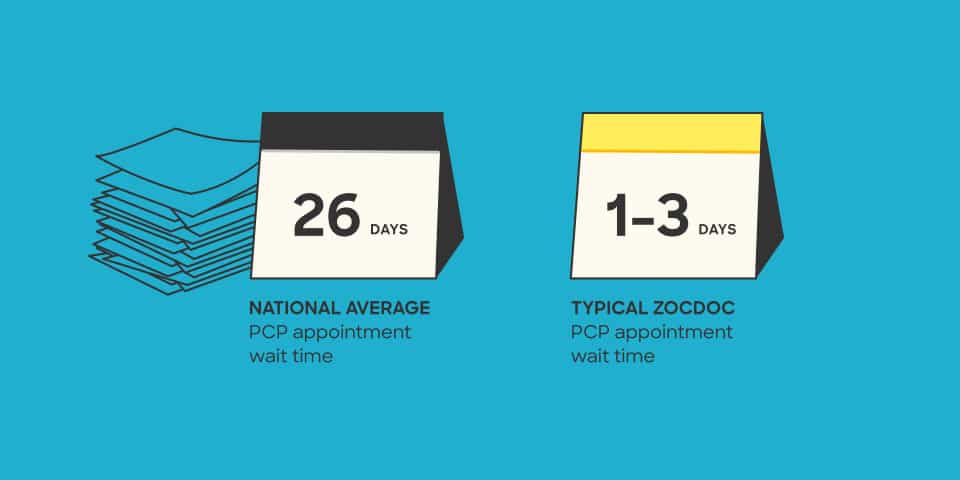
Long patient wait times affect more than patient satisfaction. They can disrupt provider schedules, increase staff stress, contribute to missed appointments, and make it harder for patients to access care when they need it.
While some delays are unavoidable, many are caused by scheduling inefficiencies, administrative bottlenecks, or inconsistent workflows. Small operational improvements can significantly reduce wait times without requiring additional staff or longer office hours.
Quick answer: To reduce patient wait times, optimize appointment scheduling, streamline check-in, improve patient flow, communicate delays proactively, and regularly monitor operational performance.
Join the platform patients trust
Attract new patients, fill your schedule, and become bookable everywhere patients look for care.
Why do patient wait times matter?
Patients increasingly expect healthcare to be convenient and accessible.
Long waits can lead to:
- Lower patient satisfaction
- Missed or delayed care
- More appointment cancellations
- Higher no-show rates
- Greater staff frustration
- Reduced provider efficiency
Reducing wait times improves both the patient experience and practice operations by helping providers stay on schedule while making visits more predictable.
The Agency for Healthcare Research and Quality (AHRQ) identifies timely access to care as an important part of a positive patient experience.
What causes long patient wait times?
Most delays begin before a patient enters the exam room.
Common causes include:
- Overbooked schedules
- Appointment lengths that don’t match visit complexity
- Late arrivals
- Incomplete intake forms
- Insurance verification delays
- Exam room turnover
- Documentation backlogs
- Staffing shortages
Understanding where delays occur helps practices focus on the changes that will have the greatest impact.
1. Improve appointment scheduling
Scheduling is one of the most effective ways to reduce patient wait times.
Review whether appointment lengths accurately reflect different visit types. New patient visits, annual physicals, procedures, and follow-up appointments often require different amounts of time.
Other scheduling best practices include:
- Standardized appointment templates
- Buffer time for complex visits
- Same-day appointment availability when appropriate
- Online scheduling
- Automated appointment reminders
A balanced schedule reduces bottlenecks throughout the day.
2. Simplify the check-in process
Administrative delays often create a backlog before patients ever see a provider.
Reduce check-in time by offering:
- Digital registration forms
- Online insurance verification
- Mobile check-in
- Pre-visit paperwork
- Electronic consent forms
Completing routine administrative tasks before arrival allows clinical visits to begin more efficiently.
3. Improve patient flow throughout the office
Patient flow affects every stage of the visit.
Review how patients move through your practice, including:
- Check-in
- Waiting room
- Exam rooms
- Clinical care
- Check-out
Look for unnecessary handoffs, repeated paperwork, or delays between each step.
Small workflow improvements often create meaningful reductions in overall visit time.
4. Communicate delays proactively
Patients generally understand that unexpected situations occur.
Frustration often comes from uncertainty rather than the delay itself.
When appointments are running behind:
- Notify patients before they arrive when possible.
- Provide realistic wait-time estimates.
- Explain unexpected delays without sharing confidential information.
- Offer rescheduling if appropriate.
Clear communication helps maintain trust even when schedules change.
5. Use technology to reduce administrative work
Healthcare technology can automate many routine tasks that contribute to delays.
Examples include:
- Online scheduling
- Appointment reminders
- Patient portals
- Secure messaging
- Digital intake forms
- Automated follow-up communication
These tools reduce manual work while giving staff more time to support patients.
The American Medical Association also recommends workflow redesign and team-based care to improve efficiency and reduce administrative burden.
6. Monitor provider schedules regularly
Scheduling improvements require ongoing evaluation.
Review provider calendars to identify:
- Frequently delayed appointment types
- Recurring scheduling bottlenecks
- High cancellation periods
- Excessive provider downtime
- Opportunities to adjust appointment templates
Small scheduling changes often produce meaningful improvements over time.
7. Measure the right performance metrics
Improvement begins with measurement.
Track metrics such as:
- Average patient wait time
- Appointment cycle time
- Provider fill rate
- No-show rate
- Same-day cancellations
- Check-in time
- Patient satisfaction
Review these metrics consistently to identify trends rather than isolated events.
8. Make it easier for patients to access care
Reducing wait times begins before patients arrive.
Online scheduling, accurate provider availability, telehealth when clinically appropriate, and flexible appointment options all help patients receive care sooner.
Practices that make scheduling easier often reduce unnecessary delays while filling open appointment slots more efficiently.
How can Zocdoc help reduce patient wait times?
One of the biggest barriers to timely care is the scheduling process itself.
Zocdoc helps practices reduce scheduling friction by allowing patients to search for providers, verify insurance, view real-time availability, and book appointments online.
Practices can also fill cancellations more efficiently and make available appointment times easier for patients to discover.
Learn how Zocdoc helps practices improve patient access.
Is your practice easy to find and simple to book?
Join Zocdoc to turn patient interest into booked appointments.
The bottom line
Reducing patient wait times requires more than working faster.
The greatest improvements usually come from better scheduling, streamlined workflows, efficient communication, and thoughtful use of technology.
Start by identifying where delays occur most often, then make targeted improvements that remove friction throughout the patient journey. Over time, those changes can improve patient satisfaction, increase operational efficiency, and help more patients receive timely care.
Frequently asked questions
How can healthcare practices reduce patient wait times?
Practices can reduce wait times by improving appointment scheduling, streamlining check-in, optimizing patient flow, communicating delays, and using technology to automate administrative tasks.
What causes long patient wait times?
Common causes include overbooked schedules, inefficient workflows, incomplete patient paperwork, insurance verification delays, staffing shortages, and appointment overruns.
Why are patient wait times important?
Long wait times can reduce patient satisfaction, delay care, increase cancellations, and make practice operations less efficient.
What metrics should practices track to reduce wait times?
Useful metrics include average patient wait time, appointment cycle time, provider fill rate, check-in time, no-show rate, cancellation rate, and patient satisfaction.
How can technology help reduce patient wait times?
Online scheduling, digital intake forms, appointment reminders, patient portals, and automated communication help reduce administrative bottlenecks while making it easier for patients to access care.